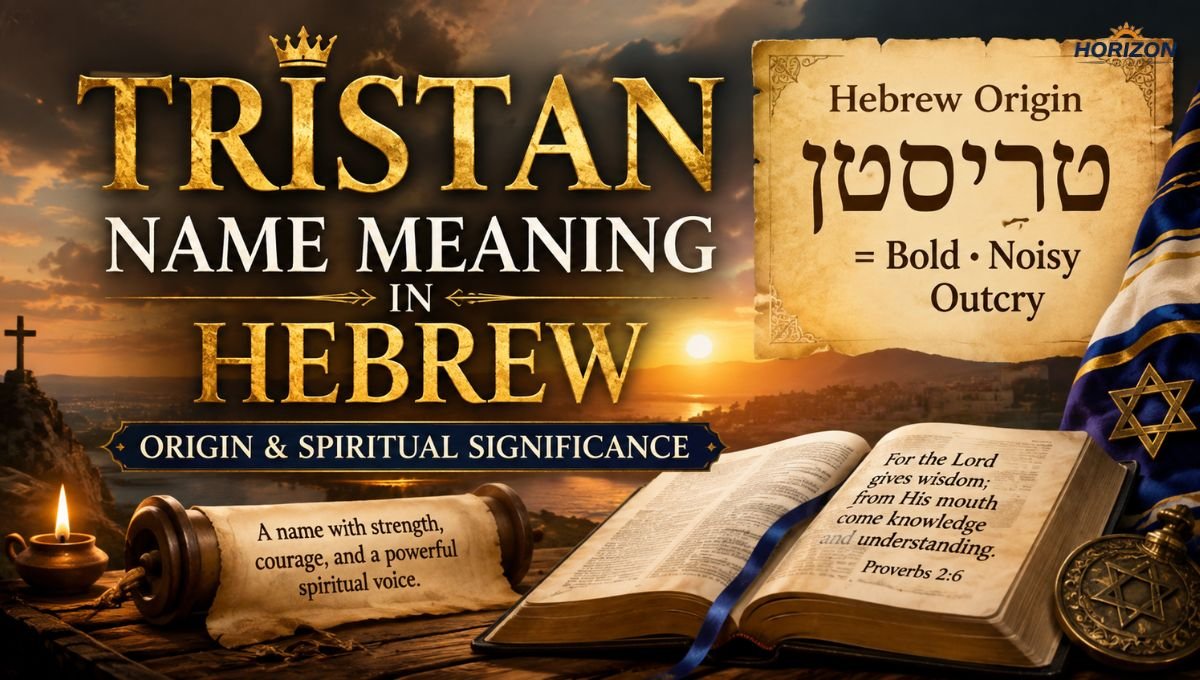
If you’re searching for the Tristan name meaning in Hebrew, the answer may surprise you: Tristan is not a Hebrew or biblical name, and it does not appear in the Bible. Instead,
In this guide, we’ll explore the Tristan name’s meaning in Hebrew, its origin, biblical context, spiritual significance, Christian interpretation, and the Bible verses that reflect themes associated with the name.
Origin and Etymology of Tristan
Tristan traces back to the old Pictish name Drustan, a diminutive of Drust, rooted in Celtic and Brythonic (Welsh) language traditions. The core meaning is generally given as “noise” or “tumult.”
The name took its modern spelling in 12th-century French Arthurian romance, where it became linked likely by folk etymology rather than true linguistic descent to the Old French word triste, meaning “sad.”
That connection is why so many baby name sites list “sorrowful” as a secondary meaning.
Tristan rose to fame through the medieval legend of Tristan and Iseult, later immortalized in Wagner’s opera Tristan und Isolde.
There’s no Semitic, Hebrew, or Ancient Near Eastern root anywhere in that lineage.
Tristan in Hebrew Within a Biblical Context
To be direct: there is no Hebrew word or root that produces the name Tristan, and it does not appear in the Hebrew Bible, the Old Testament, or the New Testament.
Unlike names such as Daniel, Michael, or Nathan, Tristan simply wasn’t part of the naming vocabulary of ancient Israel.
Some name sites loosely attach spiritual meanings to non-biblical names by pairing their etymology (like “sorrow” or “noise”)
With related Bible verses about grief or renewal. That can be a meaningful devotional exercise, but it’s worth knowing it’s an interpretation, not a translation
While Tristan isn’t a biblical name, its underlying meanings sorrow and tumult echo themes found throughout Scripture.
The Bible speaks often about God’s presence in seasons of grief and noise, and some Christian parents find it meaningful to connect a name’s tone to a spiritual truth, even without a direct linguistic link.
This is a common and legitimate practice in naming culture: choosing (or blessing) a name based on the character you hope it reflects, not necessarily its literal derivation.
Bible Verses That Reflect Tristan’s Meaning
Parents drawn to the “sorrow” association sometimes reflect on verses about comfort in hardship, such as:
- Psalm 34:18 on God’s nearness to the brokenhearted
- Isaiah 61:3 on beauty replacing ashes and joy replacing mourning
- Matthew 5:4 on comfort promised to those who mourn
These aren’t verses “about” the name Tristan they’re verses some families choose to pair with it as a personal, faith-based intention.
Spiritual Symbolism of Tristan

Beyond etymology, Tristan has picked up symbolic associations through its legendary roots: loyalty, courage, and devotion, drawn from the Arthurian knight known for his steadfastness even amid tragedy.
In a spiritual reading, some see this as a picture of faithfulness that endures through difficulty a theme very much at home in Christian thought, even if it didn’t originate there.
Tristan as a Christian Name
Is It a Good Christian Name?
Yes. A name doesn’t need biblical or Hebrew origins to be a good Christian name. Many widely used Christian names including Charles,
Grace-adjacent virtue names, or classics like Arthur come from non biblical traditions but are chosen and blessed within a Christian household. What matters most to many parents is the intention behind the name and the values instilled in the child who carries it, not its linguistic ancestry.
Don’t Miss: Tyler Name Meaning in Bible: Origin, Faith & Symbolism
Does Tristan Have a Hebrew Meaning in the Bible?
No. This bears repeating because it’s the most searched version of this question: Tristan has no Hebrew meaning and no biblical reference.
It is a Celtic-origin name that entered wider use through medieval French romance literature.
Tristan Name Meaning in Hebrew and Christian Interpretation
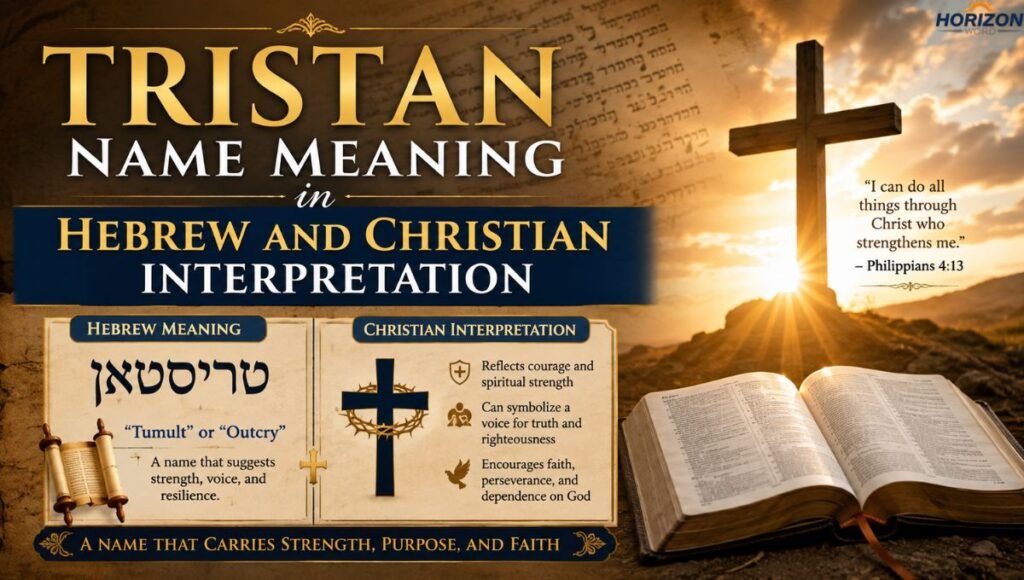
Since there’s no true Hebrew translation, Christian interpretation of Tristan tends to lean on its emotional and character-based meaning rather than scripture.
Families sometimes choose to interpret “sorrow turned to strength” or “steadfast amid noise” as a personal, faith-shaped meaning, a modern spiritual reading layered onto an older secular name.
Spiritual Symbolism of the Name Tristan
- Endurance drawn from the knight’s loyalty through hardship
- Depth of feeling tied to the “sorrow” association
- Steadiness amid chaos a reading of the “tumult” root
Famous People Named Tristan
Notable modern namesakes include NBA player Tristan Thompson, poet Tristan Tzara, and actor Tristan Wilds reflecting the name’s popularity well beyond its legendary origins.
Tristan in Legends vs Christian Truth
In the legend:
Tristan is a tragic Arthurian knight whose love for Iseult ends in sorrow and death, a story defined by fate, longing, and loss.
But in Christian truth:
Christian faith reframes sorrow not as a final fate but as something met with hope. Where the legend ends in tragedy,
Christian teaching points toward restoration, a contrast some parents find meaningful when naming a child Tristan within a household of faith.
Personality Traits Associated with Tristan
Naming culture (not Scripture) commonly associates Tristan with:
- Loyalty and devotion
- Emotional depth and sensitivity
- Quiet strength
- Creativity and romanticism
Similar Names and Variations
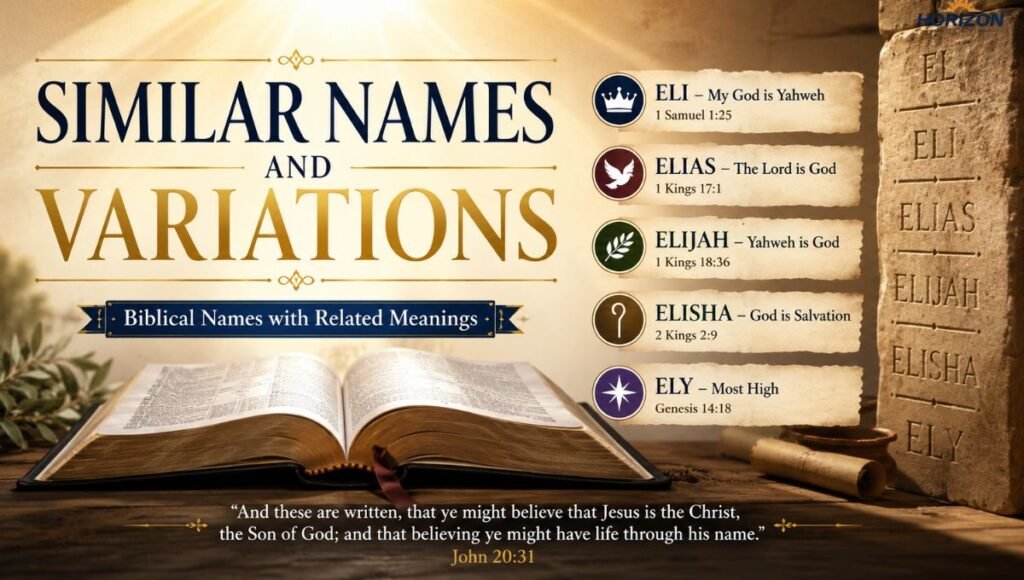
If you specifically want a name with genuine Hebrew and biblical roots, consider:
- Nathan Hebrew, “he gave,” referenced throughout the Old Testament
- Asher Hebrew, “happy, blessed,” one of the twelve tribes of Israel
- Elias Greek form of the Hebrew Elijah, “the Lord is my God”
- Judah Hebrew, “praised,” a biblical patriarch
Variations of Tristan itself include Tristram, Trystan, Tristen, and Tristán.
How to Use Tristan in a Biblical or Spiritual Context
Even without a scriptural origin, families can give Tristan spiritual meaning through practice rather than translation:
- Choose a personal “meaning verse” to associate with the name, such as Isaiah 61:3
- Use the middle name slot for a name with a direct Hebrew biblical meaning
- Frame a baby dedication or blessing around the character traits you hope the name will reflect
FAQ’s
Is Tristan a Hebrew name?
No. Tristan is Celtic in origin, derived from the Pictish name Drustan, not from Hebrew.
Is Tristan mentioned in the Bible?
No, Tristan does not appear in the Old or New Testament in any form.
What does the name Tristan mean?
Tristan means “noise” or “tumult,” with a secondary association with “sorrow” from Old French influence.
Can Tristan still be used as a Christian name?
Yes. Many Christian families choose names for their sound or personal meaning rather than a direct biblical origin.
What Hebrew names are similar in feel to Tristan?
Names like Nathan, Asher, or Elias carry true Hebrew and biblical roots if that connection is important to you.
Where does the name Tristan come from?
It originates from medieval Celtic and French tradition, popularized by the Arthurian legend of Tristan and Iseult.
Conclusion
Tristan is a name with real depth just not a Hebrew or biblical one. Its roots lie in Celtic and Old French tradition, carried into popularity through
the tragic romance of Tristan and Iseult, with meanings centered on “noise” and “sorrow.”
That said, plenty of Christian families give non-biblical names spiritual weight through intention, prayer, and chosen scripture, rather than etymology.
If a direct biblical or Hebrew connection matters most to you, names like Nathan, Asher, or Elias may be a better fit but Tristan can still be a meaningful, faith-honored choice in the right household.

Ghulam Mustafa | Founder of HorizonWord.com
Christian author and Bible content researcher with 7+ years of experience. Creating biblical name meanings, Scripture-based insights, Bible verses, and faith-filled prayers to help readers grow in faith and connect with God’s Word.