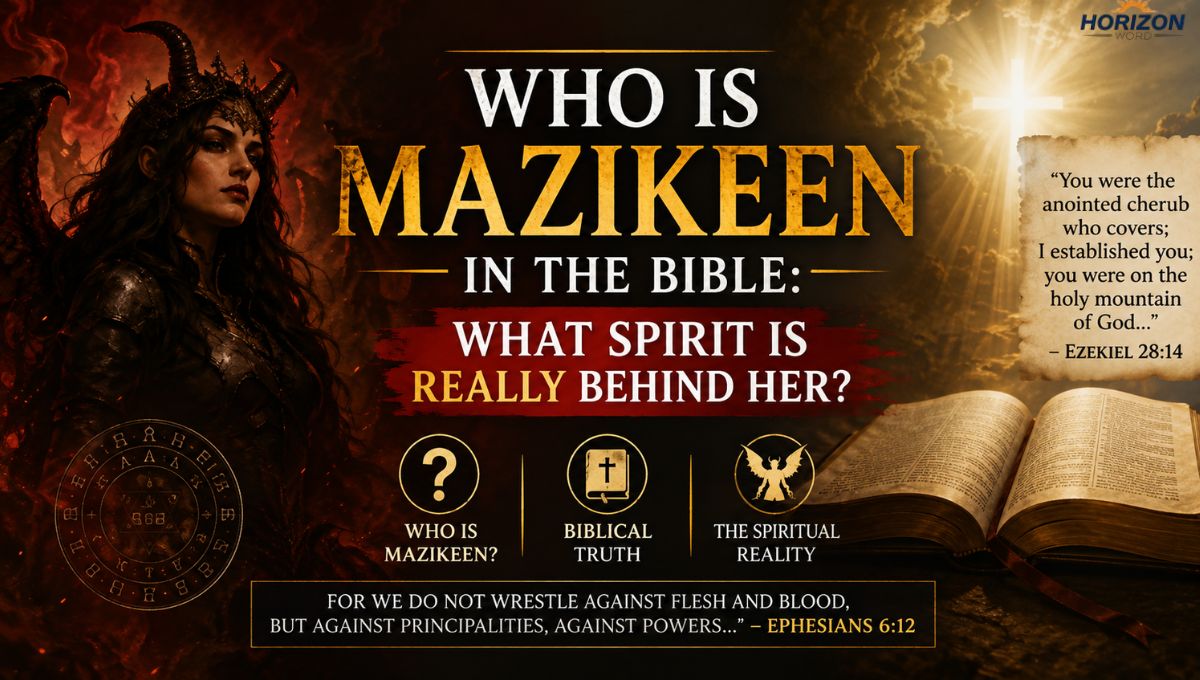
If you’ve watched Lucifer or read The Sandman, you may wonder who Mazikeen is in the Bible and whether she has real biblical roots.
Although Mazikeen sounds ancient and scriptural, she does not appear as a named demon in the Bible.
Her name is linked instead to mazikin, harmful spirits found in Jewish folklore and Talmudic tradition. Understanding this distinction reveals the true origin of Mazikeen and separates biblical tradition from modern fiction
Is Mazikeen a Real Demon?
Not as an individual, named figure. There’s no verse, book, or historical record that describes a demon called “Mazikeen.”
What is real is the category she was named after. In Jewish tradition, there’s a class of spirits known as mazikin,
And that word is where the fictional character’s name originates. So while Mazikeen herself is invented, the folklore she draws from has been around for centuries.
What the Talmud Says About Mazikin
The Talmud, a foundational text of Rabbinic Judaism written between roughly the 3rd and 6th centuries CE, discusses mazikin across several tractates.
They’re described as invisible entities capable of causing everything from minor mishaps to serious harm.
According to Talmudic tradition, mazikin were created on the sixth day, right as the Sabbath was about to begin.
God supposedly ran out of time to give them physical bodies, leaving them as spirits stuck between the angelic and human worlds.
That unfinished, in-between nature is part of what made them so unsettling to ancient audiences they weren’t fully otherworldly, but they weren’t human either.
Mazikeen Mythology
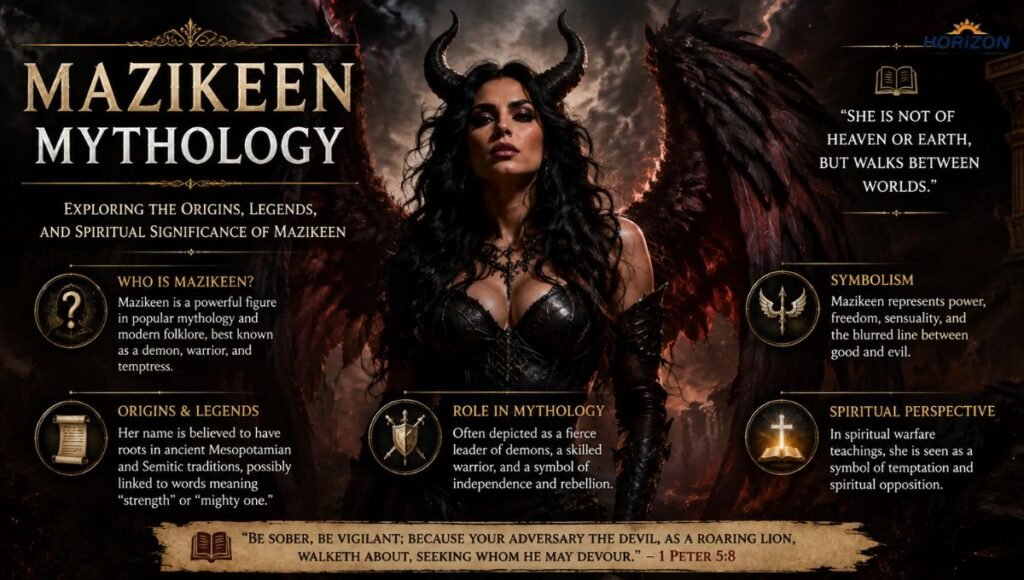
Origins in Jewish Folklore
The word “mazikin” isn’t a one-off reference. It shows up throughout rabbinic literature as an accepted part of how people explained bad luck, illness, and strange accidents.
Alongside other folkloric beings like the se’irim (goat-demons) and shedim, mazikin were part of a much larger unseen ecology that ancient and medieval Jewish communities believed surrounded daily life.
The Folklore Story
One well-known folk tale describes a man startled by a knock at his door late at night. When he opened it, all he found was a donkey
But the donkey grew impossibly tall, towering over the house before vanishing without a trace. Locals were convinced a mazik had caused it.
Stories like this one weren’t meant to be taken as rigid theology; they were cautionary, almost campfire-style tales meant to explain the unexplainable.
Understanding the Origin of the Name Mazikeen
The name traces back to the Hebrew root mazik (מזיק), meaning “one who harms” or “damaging one.”
In the Talmud, the plural form appears as mazikin, while Babylonian Aramaic sources use the spelling mazzikin.
Author Neil Gaiman took that ancient root and anglicized it into “Mazikeen” when he created the character for DC Comics.
It’s a small but deliberate spelling choice close enough to the original term to carry its weight, but distinct enough to belong to a new character entirely.
Don’t: Miss: Tristan Meaning in Bible: The Truth About This Name
Cultural and Spiritual Significance of the Name Mazikeen
In Jewish mystical thought, names weren’t just labels they were believed to hold real power. Knowing a spirit’s true name was thought to grant some measure of authority over it.
That’s part of why “Mazikeen” works so well as a character name: it borrows the gravity of a tradition where naming something correctly actually mattered.
Who Is Mazikeen in Sandman?
Mazikeen first appeared in The Sandman #22 in 1990, created by Neil Gaiman. In that universe, she’s introduced as a demon connected to Hell,
Embodying the same harmful, unsettling energy associated with the Talmudic mazikin but reimagined as an individual character with her own motivations rather than an anonymous class of spirits.
What Kind of Demon Is Mazikeen in the Bible?
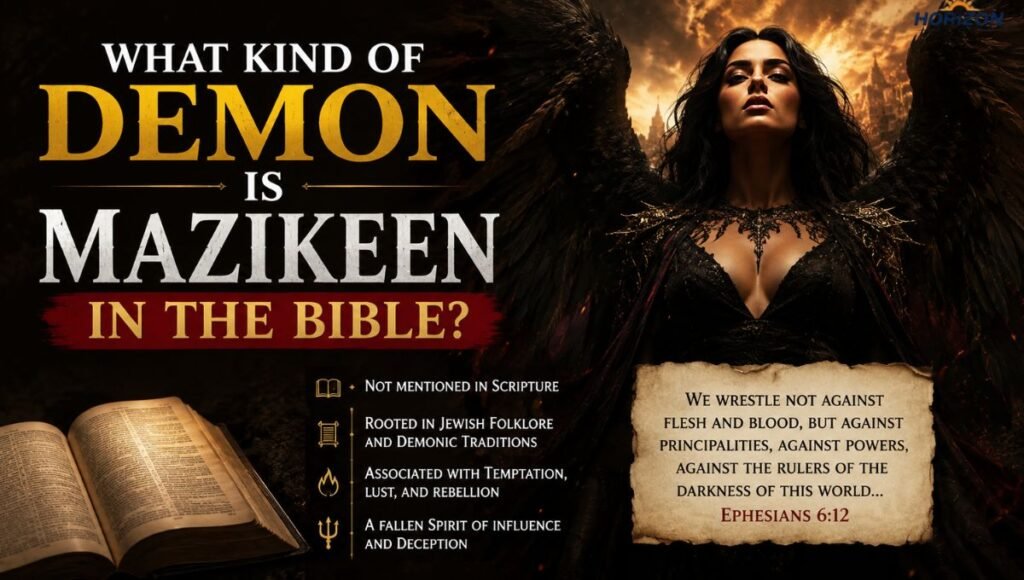
She isn’t one but if you’re asking what kind of demon the folklore behind her name describes, the mazikin were considered mischievous, harmful, and largely invisible. They weren’t portrayed as grand, world-ending evils. They were closer to the supernatural explanation for everyday misfortune:
An illness with no clear cause, an accident that shouldn’t have happened, a string of bad luck.
Closest Biblical Parallels
The Bible itself doesn’t name mazikin, but it does reference other spirits sometimes grouped into the same broader folkloric category, such as the se’irim mentioned in Leviticus 17:7 and Isaiah 13:21. Lilith,
Who becomes central to Mazikeen’s fictional backstory, also gets a single, brief mention in Isaiah 34:14. None of these references describe Mazikeen specifically, but they show the kind of biblical soil her mythology grew out of.
Mazikeen of Lilith
In both the comics and the Lucifer TV series, Mazikeen is portrayed as a daughter of Lilith the figure from Jewish folklore traditionally described as Adam’s first wife,
Who is said to have become the mother of demons after leaving Eden. This lineage gives the character a mythological pedigree that connects her directly to one of folklore’s most famous female figures.
Who Is the Father of Mazikeen?
In the Lucifer comics, her father is identified as Ophur, a serpent demon. The television adaptation never names her father, leaving that part of her backstory intentionally open.
Her Relationship with Lucifer
Across the comics and the TV series, Mazikeen is depicted as fiercely loyal to Lucifer, often serving as his enforcer, protector, or closest confidante.
Their bond shifts over time, but loyalty sometimes tested, sometimes unshakable remains the throughline of their dynamic.
Is Mazikeen Mentioned in the Bible?
No. There is no verse or biblical passage that references Mazikeen by name. Any connection to Scripture is indirect, running through the broader folkloric idea of mazikin rather than a direct textual reference.
Mazikeen vs. Biblical Demons: Key Differences Explained
| Feature | Mazikeen | Traditional Biblical Demons |
| Textual origin | Fictional character (1990) | Referenced across Old and New Testament passages |
| Source material | Jewish folklore + Talmud-inspired name | Scripture itself |
| Portrayal | Individual, complex personality | Often depicted as forces of temptation or affliction |
| Purpose | Storytelling and character development | Theological and moral instruction |
Does Mazikeen Have a Biblical Meaning or Spiritual Connection?
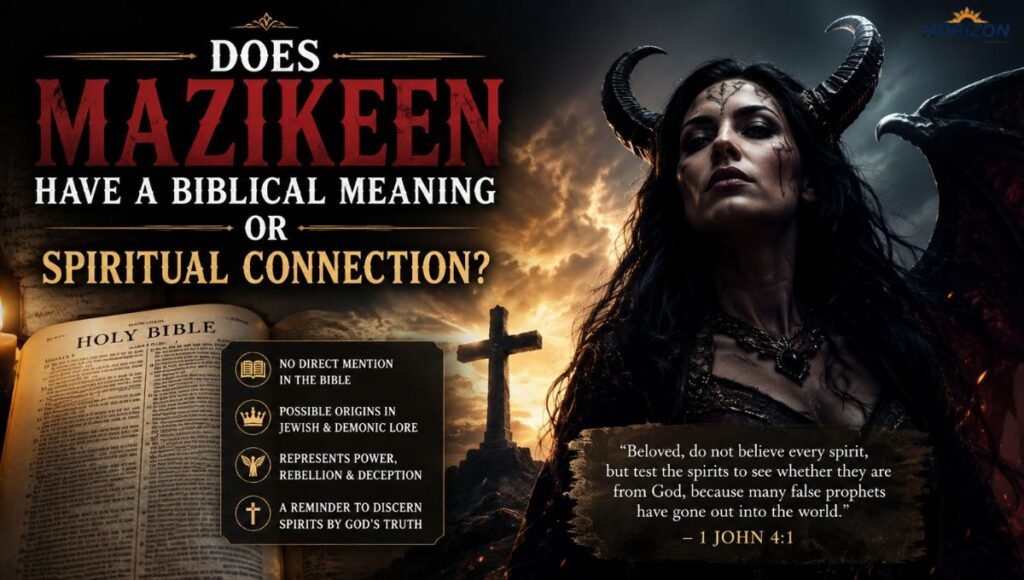
Not a direct one, but the themes attached to her carry spiritual weight for a lot of readers and viewers.
Loyal Demon
Despite her demonic nature, Mazikeen’s loyalty to those she cares about is one of her defining traits, complicating any simple “good vs. evil” reading of her character.
Strong and Independent Woman
She’s consistently written as capable, self-reliant, and unwilling to be defined by anyone else’s expectations of her.
Complexities of Existence
Mazikeen exists in a gray area neither purely villain nor hero which is part of why audiences find her so compelling.
Mazikeen Demon Face
In both the comics and the TV series, Mazikeen has a demonic true form beneath her human appearance, marked by a scarred or disfigured face.
It’s a visual reminder that her human look is essentially a mask over something far older and stranger.
The Bigger Picture: Mazikeen’s Cultural Impact
Why She Resonates
Mazikeen’s popularity isn’t really about theology, it’s about identity. She’s a character who exists between categories: not fully evil, not fully redeemed, not entirely human in spirit even when she looks at it.
Themes She Embodies
Loyalty, autonomy, and the struggle to define yourself outside of where you came from are the threads that run through nearly every version of her story.
Frequently Asked Questions
Is Mazikeen a real biblical demon?
No. She’s a fictional character created in 1990, though her name comes from real Jewish folklore.
What does the name Mazikeen mean?
It comes from the Hebrew root mazik, meaning “one who harms” or “damaging one.”
Are mazikin mentioned in the Talmud?
Yes, mazikin appear across multiple Talmudic tractates as harmful, invisible spirits.
Is Mazikeen related to Lilith in the Bible?
Lilith is briefly mentioned in Isaiah 34:14, but her connection to Mazikeen comes from folklore and pop culture, not Scripture.
Who created the character Mazikeen?
Neil Gaiman created her for The Sandman comic series in 1990.
Does the Bible describe mazikin-type spirits?
The Bible doesn’t use the term “mazikin,” though it references related folkloric beings like the se’irim.
Conclusion
Mazikeen isn’t a biblical figure, and no verse anywhere names her directly. What she does carry is the linguistic and folkloric DNA of the mazikin
the invisible, harm-causing spirits described in the Talmud centuries before Neil Gaiman ever picked up a pen.
That blend of ancient folklore and modern storytelling is exactly why she feels so believable on screen. She isn’t scripture, but she isn’t pure invention either;
She’s a bridge between the two, which is part of what makes her one of pop culture’s more memorable demons.

Ghulam Mustafa | Founder of HorizonWord.com
Christian author and Bible content researcher with 7+ years of experience. Creating biblical name meanings, Scripture-based insights, Bible verses, and faith-filled prayers to help readers grow in faith and connect with God’s Word.