
Searching for “biblically accurate Lucifer” can lead to many images of horned devils, fallen angels, and rebellious figures. But what does the Bible actually say?
This guide explores Lucifer’s biblical identity, the meaning of Helel, and how later Christian tradition, art, and literature shaped his familiar image separating Scripture from myth and interpretation.
Biblically Accurate Lucifer Identity
Short answer: In the Bible, “Lucifer” is not the personal name of an angel. It is a Latin word meaning “light-bringer,” used in Isaiah 14:12 to translate the Hebrew Helel, a poetic title for the morning star.
In context, the title is aimed at the king of Babylon (Isaiah 14:4). Later Christian tradition connected the passage to Satan.
Biblically Accurate Description of Lucifer Appearance
Biblically Accurate Lucifer:
Scripture never describes Lucifer’s appearance. There are no horns, red skin, bat wings, or pitchfork.
The closest imagery is the brightness of a rising star in Isaiah. Ezekiel 28 adds jewels and a guardian cherub in Eden, but that passage addresses the king of Tyre.
Some traditions read both as echoes of Satan. Paul also says Satan can disguise himself as an “angel of light” (2 Corinthians 11:14).
The Morning Star Imagery in Isaiah’s Prophecy
The morning star rises brightly just before dawn, then vanishes when the sun appears. It is a fitting picture of a ruler who shines briefly and is then brought low.
Isaiah 14:12–15 follows that arc. The figure climbs, boasts of rivaling the Most High, and ends in the grave.
Jesus is also called the “bright morning star” (Revelation 22:16), so the image itself doesn’t mean evil. The pride of the speaker does.
Does Lucifer Possess Physical Form After His Fall?
Scripture doesn’t say. Angels are described as spirits (Hebrews 1:14), and Ephesians 6:12 speaks of spiritual forces of evil.
The serpent in Genesis 3 is identified with the devil in Revelation 12:9, but the Bible never gives him a fixed body. Most Christian traditions understand him as a non-physical being who can deceive but not rule a physical kingdom.
Common Misconceptions About Lucifer in Modern Culture
- “Lucifer was Satan’s original name.” The Bible never says this.
- “Isaiah 14 is an angel’s origin story.” The chapter opens by naming the king of Babylon.
- “The devil rules hell.” Jesus describes hell as prepared for the devil and his angels (Matthew 25:41), not as his throne room.
- “Paradise Lost is Scripture.” Much popular imagery comes from Milton, not the Bible.
Lucifer in Biblical Context: Symbolism and Interpretation
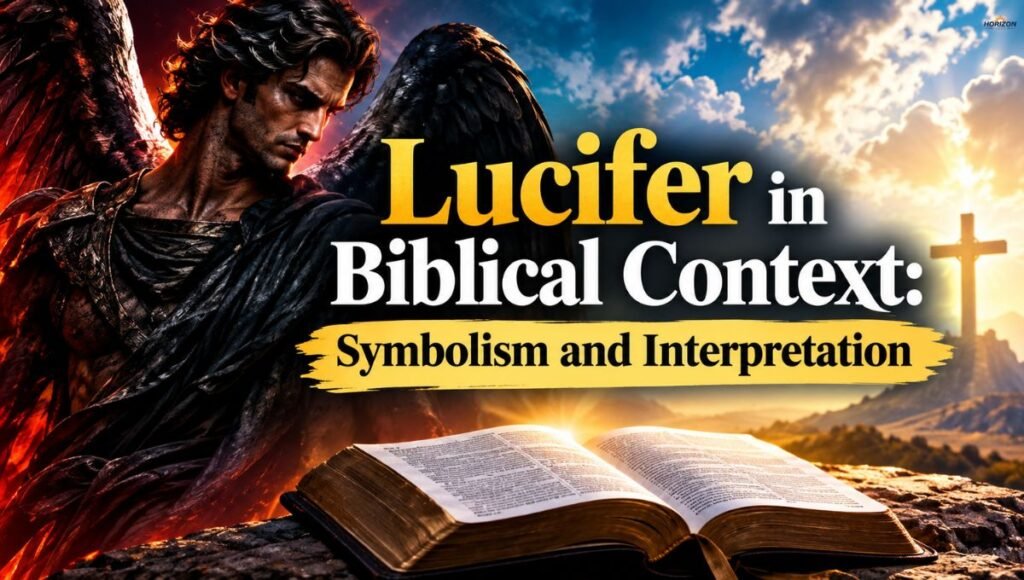
Isaiah 14 is a mashal, a taunt song. It uses cosmic language to mock a real tyrant. Many Jewish and modern scholars read it that way.
Some early Christians, including Origen, also saw a second layer pointing to Satan’s fall.
Don’t Miss: Biblical Meaning of Green Snakes in Dreams Warning or Blessing?
Lucifer’s Rebellion and the Biblical Theme of Pride
Pride before a fall is a recurring biblical pattern. Proverbs 16:18 states it plainly. Babel, Pharaoh, and the king of Tyre all reach too high. Paul warns that a conceited leader can “fall into the condemnation of the devil” (1 Timothy 3:6).
Lucifer, Satan, and the Fall: What Scripture Says
The New Testament speaks of Satan’s fall without using the name Lucifer. Jesus says he saw Satan fall “like lightning” (Luke 10:18). Revelation 12 describes war in heaven and a dragon thrown down.
Biblical Symbols Associated With Lucifer Explained
Biblically Accurate Lucifer:
- Morning star: brilliance that fades
- Ascent to heaven: ambition and self-exaltation
- Fall and lightning: sudden judgment
- Pit or Sheol: humiliation and death
- Serpent: deception, per Genesis 3 and Revelation 12:9
How to Understand Lucifer Through Scripture and History
- Read Isaiah 14 from verse 4, not just verse 12.
- Compare Ezekiel 28, Luke 10, and Revelation 12 separately, and ask what each passage names.
- Trace how the word “Lucifer” moved through Latin, English Bibles, and art.
What Scripture Actually Reveals About Lucifer
Three things stand out. Isaiah 14 targets a human king. Ezekiel 28 targets another, with Eden imagery.
Only the New Testament passages speak directly of Satan’s defeat, and none of them says “Lucifer.” The full “fallen angel named Lucifer” story is a synthesis built over centuries.
The Hebrew Original: Helel and Its True Meaning
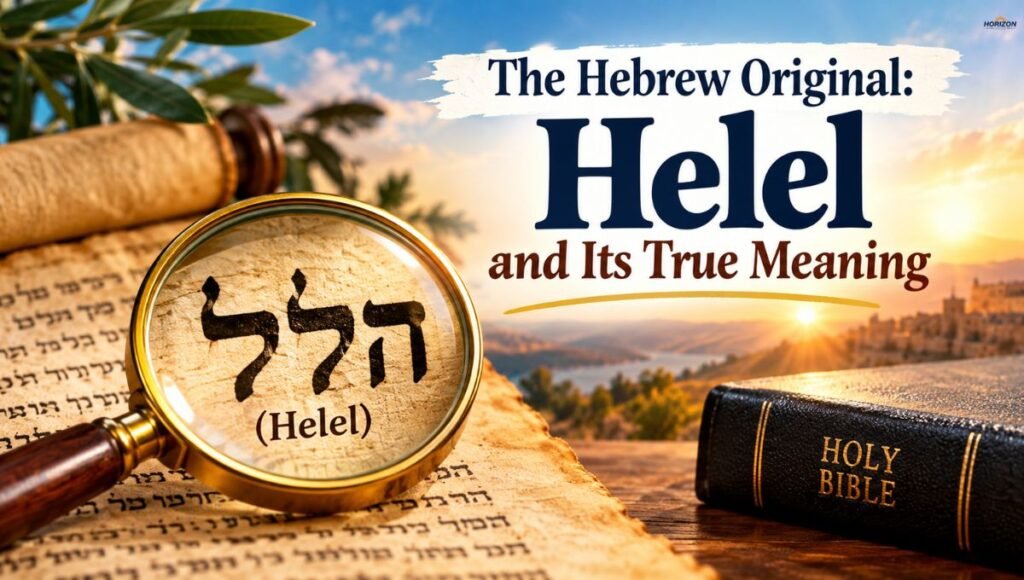
The Hebrew phrase is Helel ben Shachar, roughly “shining one, son of the dawn.” Helel comes from a root meaning “to shine” and likely refers to Venus.
The ancient Greek Septuagint translated it heōsphoros, “dawn-bringer.” Neither version presents a personal name.
Jerome’s Latin Vulgate and the Birth of ‘Lucifer’
Jerome’s Vulgate, completed in the late fourth century, rendered Helel as lucifer, an ordinary Latin word for the morning star. The same word appears in 2 Peter 1:19 with a positive meaning.
The King James Version of 1611 kept “Lucifer” in Isaiah, which helped turn a title into a name. Most modern versions use “Day Star” or “morning star.”
Critical Distinction Between Lucifer and Satan in Scripture Biblically Accurate Lucifer:
Satan is a Hebrew word meaning “adversary.” In Job 1, “the satan” is a figure in God’s court, not yet a rebel king. Lucifer is a Latin epithet.
The two words never appear together in one verse. Linking them is a theological tradition, and it’s a defensible one, but it isn’t stated in the text.
Early Medieval Period: The Ethereal Blue Angel
Early Christian art didn’t make the devil monstrous. In a sixth-century mosaic at Sant’Apollinare Nuovo in Ravenna, Satan appears as a blue-robed angel beside Christ. He looks like a fallen member of heaven’s court, not a beast.
High Medieval Transformation to Grotesque Forms
By the later Middle Ages, fear and preaching pushed the image toward the grotesque: horns, hooves, wings like a bat’s, and fiery pits.
Dante’s Inferno (early 1300s) finishes the picture with a three-faced Lucifer frozen at the bottom of hell. This is literature, not exegesis.
Renaissance Romanticization: Milton’s Tragic Rebel
John Milton’s Paradise Lost (1667) gave Lucifer a voice, a proud speech, and a famous line: “Better to reign in Hell, than serve in Heav’n.” Readers began to see him as a tragic, charismatic rebel. That image still shapes films, games, and TV.
Contrasts Between Artistic and Biblical Portrayals
| Feature | Popular Portrayal | What Scripture Says |
| Name | Lucifer as a personal name | Title for a king (Isaiah 14) |
| Look | Horns, wings, red skin | Never described |
| Domain | Ruler of hell | Hell prepared for him (Matthew 25:41) |
| Character | Suave tragic hero | Proud, deceptive adversary |
Theological Insights from a Biblically Accurate Lucifer
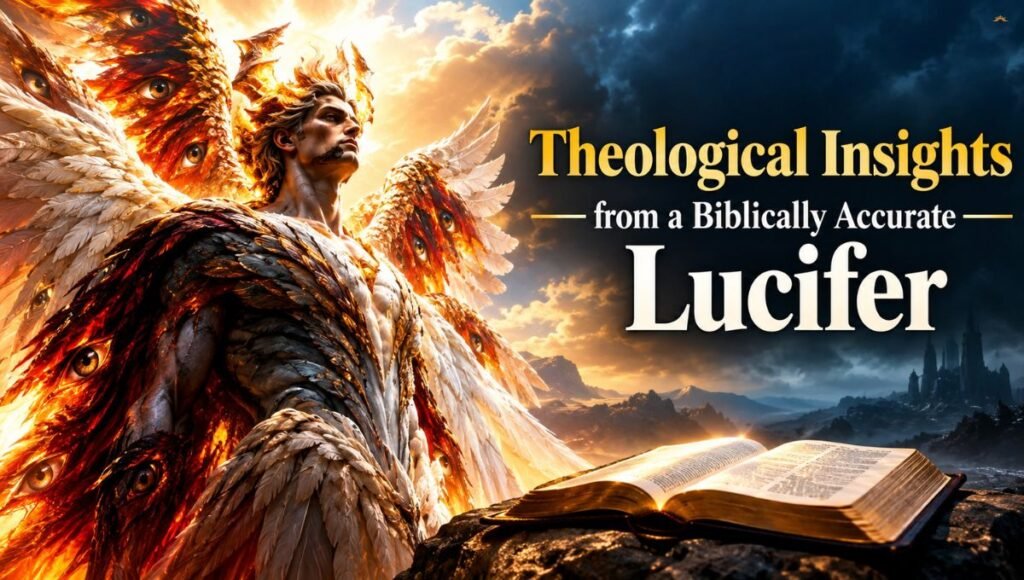
The Origin of Evil Within a Perfect Being
Classic Christian teaching holds that God created everything good, including angels. Evil begins not as a created thing but as a misuse of freedom, a turning from the good.
Augustine described evil as a lack of good rather than an independent substance. Scripture gives no full explanation, which is why this remains a question of interpretation.
Lessons for Humanity: Humility and Dependence on God
Biblically Accurate Lucifer:
Isaiah’s warning isn’t only about ancient kings. Pride, the urge to be “like the Most High,” is a temptation for everyone.
Philippians 2:5–8 offers the opposite model: Christ, who had every right to status, chose humility. The practical lesson is dependence, not domination.
Frequently Asked Questions About Biblically Accurate Lucifer:
Is Lucifer in the Bible?
Only as a Latin translation of Helel in Isaiah 14:12, mainly in the Vulgate and KJV. Modern Bibles use “Day Star” or “morning star.”
Is Lucifer the same as Satan?
Christian tradition links them, but the text doesn’t. “Satan” is a Hebrew title meaning “adversary.”
What does the name Lucifer mean?
It’s Latin for “light-bringer,” an old term for the morning star, or Venus.
What did Lucifer look like in the Bible?
Scripture gives no description. Horns and bat wings come from medieval art.
Was Lucifer an angel?
Isaiah 14 addresses the king of Babylon. The fallen-angel reading is a later tradition based on how Christians connected other passages.
Who made Lucifer the devil’s name?
Early writers like Origen and Jerome laid the groundwork. Dante and Milton later made it famous.
Conclusion
The Biblically Accurate Lucifer:is a poetic title, not a named angel. The Hebrew Helel became “Lucifer” through Jerome’s Latin, and centuries of tradition, medieval art, and Milton’s poetry filled in a personality and a face that Scripture never gave.
Reading Isaiah 14 in context, distinguishing Lucifer from Satan, and separating art from text gives you a clearer picture. The enduring lesson is not about a monster, but about pride and the humility that guards against it.

Ghulam Mustafa | Founder of HorizonWord.com
Christian author and Bible content researcher with 7+ years of experience. Creating biblical name meanings, Scripture-based insights, Bible verses, and faith-filled prayers to help readers grow in faith and connect with God’s Word.










1 thought on “Biblically Accurate Lucifer: Truth, Story & Myths Explained”