Choosing a name for a daughter is a meaningful decision, especially for Christian families. The biblical meaning of the name Charlotte is often associated with a free woman, reflecting themes of freedom, strength, grace, and dignity.
Although Charlotte is not directly mentioned in the Bible, its meaning connects beautifully with biblical values and faith.
In this article, discover the Charlotte name meaning, origin, spiritual significance, and biblical themes that make this name a beautiful choice.
The Origin and Meaning of Charlotte
Charlotte is the French feminine form of Charlot, itself a diminutive of Charles. Charles traces back to the Germanic word karilaz, meaning “free man” or “man of strength.” Because of this lineage, Charlotte is most often translated as “free,” “free woman,” or “petite and strong.”
It’s worth noting upfront: Charlotte is not a name found directly in the Bible. Unlike names such as Ruth, Hannah, or Mary, there is no biblical figure named Charlotte.
Its biblical meaning, then, comes not from Scripture itself but from the spiritual weight carried by its core meaning freedom, a concept that runs throughout the entire Bible.
This distinction matters for accuracy, but it doesn’t diminish the name’s spiritual resonance. Many beloved names carry meaning through their themes rather than through a direct scriptural reference, and Charlotte is a strong example of this.
Biblical Themes Related to Charlotte
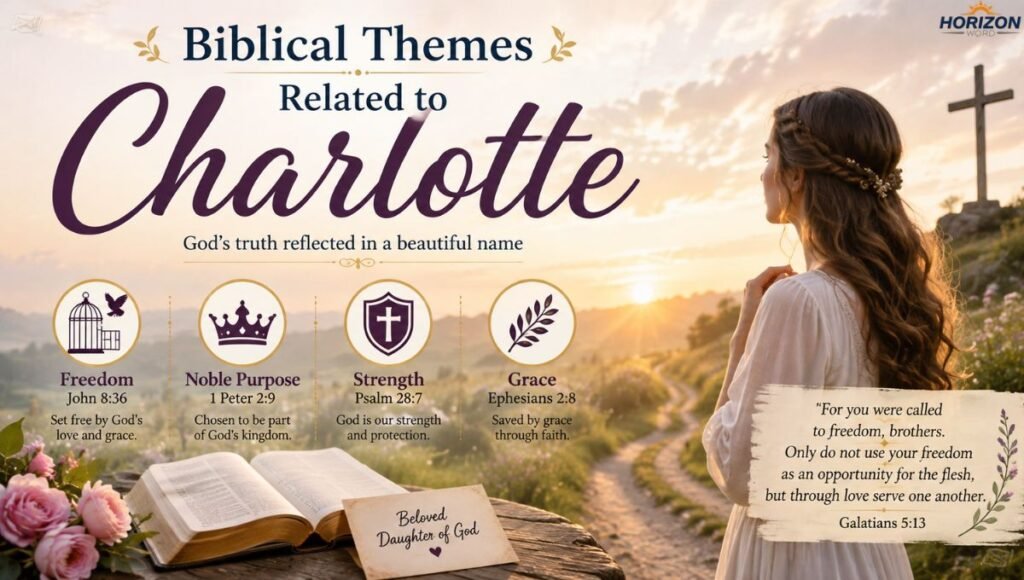
Although Charlotte isn’t a scriptural name, several biblical themes align closely with its meaning and history.
Leadership and Strength
Because Charlotte descends from Charles, a name associated with strength and rule, it carries an undertone of quiet leadership.
In biblical terms, true strength is often tied to character rather than force, a theme echoed in Proverbs 31:25, which describes a woman “clothed with strength and dignity.”
Freedom in Christ
The clearest biblical connection lies in Charlotte’s core meaning of “free.” Freedom is a central theme in the New Testament, especially in Galatians 5:1, which speaks of standing firm in the freedom Christ has given believers.
For Christian parents, naming a daughter Charlotte can serve as a daily reminder of spiritual freedom from sin and fear.
Service and Humility
Many names rooted in leadership carry a secondary theme of humble service, reflecting the biblical model that true greatness comes through serving others (Mark 10:43-45).
Charlotte’s association with quiet strength fits naturally into this idea of leading through humility rather than authority.
Grace and Dignity
Charlotte has long been associated with elegance and refinement, particularly through its royal history.
In a spiritual sense, this pairs well with the biblical concept of grace, unearned favor and dignity that comes from God rather than status or achievement.
Don’t Miss: Bible Verses About Loving Your Mother
Faith and Character Development

Names shape more than identity; for many families, they shape aspiration. A child named Charlotte may grow up hearing that her name means “free” or “strong,” which can naturally open conversations about faith, resilience, and identity in Christ.
Parents often use a name’s meaning as a foundation for character-building conversations, encouraging their daughter to embody freedom from fear, strength in adversity, and grace under pressure, all values the Bible consistently upholds.
Charlotte in Historical and Christian Contexts
Charlotte rose to prominence in Christian Europe largely through royal history. Queen Charlotte of Mecklenburg-Strelitz, who became queen consort of Great Britain in the 18th century, was known for her devout faith and support of charitable and religious causes.
Her legacy helped popularize the name across English-speaking Christian communities.
Author Charlotte Brontë, raised in a devout clergyman’s household, is another notable historical bearer whose life and writing were deeply shaped by Christian faith and moral reflection.
While neither figure is a biblical character, their historical association with Christian values has contributed to how the name is perceived within faith communities today.
Prayers and Blessings for Charlotte
Many Christian parents choose to bless their daughter’s name with a short prayer, asking that she grow into the meaning behind it. A simple blessing might include:
- A prayer for freedom from fear and anxiety, rooted in Christ.
- A prayer for strength of character in difficult seasons.
- A prayer for grace, humility, and wisdom as she grows.
- A prayer that her life reflects dignity and quiet confidence.
These blessings don’t need to be formal; many families simply pray over a name during dedication or baptism ceremonies, asking God to shape the child’s character in line with the name’s meaning.
The Timeless Beauty of Charlotte
Charlotte has remained a beloved name for centuries, and its staying power comes from more than trend cycles.
It carries elegance, history, and a meaning of freedom that resonates across generations and cultures.
For Christian families, that timelessness pairs naturally with the unchanging nature of biblical truth.
Charlotte Name Meaning and Spiritual Significance
At its core, the spiritual significance of Charlotte centers on freedom and strength. In a Christian worldview, true freedom isn’t found in independence from others but in relationship with God.
This gives the name a layered meaning: freedom not as isolation, but as security found in faith.
Parents drawn to this name often appreciate that it can represent both personal strength and spiritual dependence on God, two ideas that, biblically, are not in conflict but work together.
Biblical Lessons and Christian Values Behind Charlotte

Several Christian values map naturally onto Charlotte’s meaning:
| Theme | Related Meaning | Biblical Connection |
| Freedom | “Free woman” | Galatians 5:1 |
| Strength | Rooted in Charles | Proverbs 31:25 |
| Grace | Royal/refined heritage | Ephesians 2:8 |
| Humility | Service-oriented leadership | Mark 10:43-45 |
This table isn’t meant to suggest these verses reference the name directly, but rather to show how its meaning aligns with recurring biblical themes.
Charlotte: Faith, Freedom, Strength, and Grace
Taken together, Charlotte tells a story of a woman who is free, strong, graceful, and humble, qualities the Bible consistently celebrates in its portrayal of godly character.
It’s this combination that makes the name so appealing to Christian parents searching for something meaningful rather than simply popular.
A Name to Inspire and Empower

Ultimately, a name is a starting point, not a guarantee. What Charlotte offers is a meaningful framework: freedom, strength, and grace, values that Christian parents can nurture through upbringing, prayer, and example.
For many families, that framework is exactly what makes the biblical meaning of the name Charlotte feel so fitting.
Frequently Asked Questions
What does Charlotte mean in the Bible?
The biblical meaning of the name Charlotte isn’t drawn from a direct mention in Scripture; instead, its meaning, “free” or “free woman,” connects to the biblical theme of freedom found throughout the New Testament.
Is Charlotte a biblical name?
No, Charlotte is not a biblical name. It has French and Germanic origins and does not belong to any figure mentioned in Scripture.
What is the spiritual meaning of Charlotte?
Spiritually, Charlotte is associated with freedom, strength, and grace, ideas that align closely with Christian teachings about identity in Christ.
Does Charlotte mean free woman?
Yes. Charlotte is widely translated as “free woman” or “free man,” stemming from its root name, Charles.
What biblical women does Charlotte represent?
Charlotte isn’t tied to a specific biblical woman, but its meaning of freedom and strength echoes qualities seen in women like Deborah, Esther, and the Proverbs 31 woman.
Why is Charlotte popular for Christian families?
Christian families are often drawn to Charlotte because of its meaning of freedom and strength, alongside its historical association with faith-centered figures like Queen Charlotte.
Conclusion
While Charlotte isn’t found in the pages of Scripture, the biblical meaning of the name Charlotte tells a story that resonates deeply with biblical values.
Freedom, strength, grace, and humility are themes woven throughout the Bible, and they find a natural home in this timeless name.
For parents seeking a name rich in character rather than direct scriptural origin, understanding the biblical meaning of the name Charlotte offers both historical elegance and spiritual depth, a name that can grow alongside a daughter’s faith for a lifetime.

Ghulam Mustafa | Founder of HorizonWord.com
Christian author and Bible content researcher with 7+ years of experience. Creating biblical name meanings, Scripture-based insights, Bible verses, and faith-filled prayers to help readers grow in faith and connect with God’s Word.










2 thoughts on “The Powerful Biblical Meaning of the Name Charlotte”