
The biblical meaning of William reflects strength, faith, and protection. Though William is not found in the Bible, its meaning, “resolute protector,” connects with Christian values of courage, purpose, and leadership.
What Does William Mean? Origin and Etymology
William comes from the Old Germanic name Willahelm, formed from two elements: wil (meaning “will” or “desire”) and helm (meaning “helmet” or “protection”).
Put together, the name translates to “resolute protector” or “determined guardian” , someone whose will itself acts as a shield for others.
The name entered the English-speaking world through Norman French after the Conquest of 1066, brought to England by William the Conqueror.
It quickly became one of the most common names in English history, and it remains a top-10 name for boys today.
Is William a Biblical Name?

Here’s the honest, direct answer: no, William does not appear anywhere in the Bible, and it is not a Hebrew name. It’s Germanic in origin and came into existence centuries after the biblical texts were written.
That said, William has been a beloved name in Christian families for nearly a thousand years largely because its core meaning aligns so closely with biblical values.
Being a “protector” who acts with resolve and conviction is a theme that runs throughout Scripture, which is why William has taken on real spiritual meaning for believers, even without a direct biblical namesake.
Don’t Miss: Carter Name Meaning, Origin, Spiritual Significance, and More
William Name Meaning in Christianity: Faith, Strength & Purpose
In Christian naming traditions, meaning often matters more than direct scriptural origin. Names like William are chosen because their definitions echo biblical virtues: courage, steadfastness, and a heart set on defending others.
For Christian parents, naming a son William can be a way of speaking a blessing over him hoping he grows into someone whose strength of will is used to protect and serve, not to dominate.
It’s a name that carries the weight of leadership paired with responsibility.
William and Biblical Symbolism: Protection, Leadership & Faith
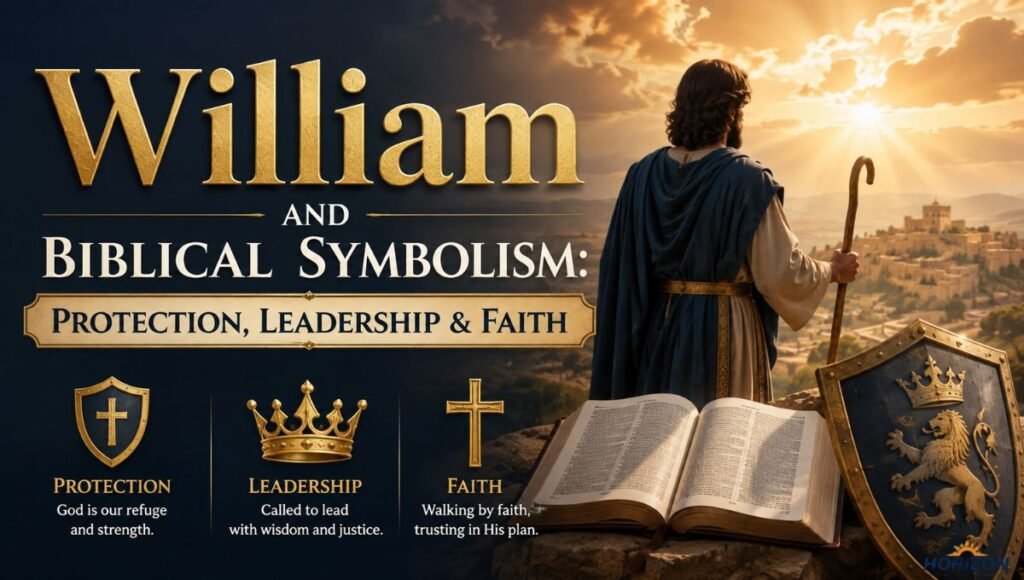
While William isn’t a scriptural name, its imagery connects naturally to biblical symbolism:
- The helmet recalls the “helmet of salvation” described in Ephesians, a piece of spiritual armor believers are called to wear.
- Resolve and determination echo the steadfastness the Bible repeatedly asks of the faithful, from Joshua’s call to “be strong and courageous” to Paul’s encouragement to “stand firm.”
- Protection reflects God’s own character as a shield and defender of His people throughout the Psalms.
These associations are why William resonates as a name of quiet spiritual strength, even though it wasn’t coined by biblical authors.
William Name Meaning: Christian Values and Spiritual Significance
Christian families who choose William often point to three qualities they hope the name inspires:
- A resolute faith that doesn’t waver under pressure
- A protective heart, especially toward family and the vulnerable
- A sense of purpose, using strength for good rather than self-interest
These aren’t meanings pulled from a Bible verse about William, they’re values the name has come to represent through centuries of Christian use.
The Biblical Meaning of William: Three Core Themes

1. Resolute Faith and Determination
The “wil” in William speaks to willpower and determination qualities the Bible consistently celebrates in figures who held firm to their convictions under difficulty.
A child named William can be seen as carrying a name that calls him toward steadiness of faith.
2. Divine Protection and the Helmet of Salvation
Ephesians 6:17 describes the “helmet of salvation” as part of the armor of God, a defense for the mind and spirit.
William’s literal meaning as “helmet” makes this connection especially fitting for Christian parents who want a name symbolizing spiritual protection.
3. Spiritual Guardianship and Leadership
Beyond personal protection, William’s meaning extends to guardianship over others, a leadership rooted in service rather than authority for its own sake.
This mirrors the biblical model of a shepherd-leader, someone strong enough to protect and humble enough to serve.
The Spiritual Meaning of William in Hebrew Context
Because William has no Hebrew root, it doesn’t carry a direct Hebrew translation the way biblical names like Daniel or Michael do.
Some name-meaning sites attempt to assign Hebrew equivalents to William, but these are modern interpretations rather than historical or linguistic fact.
The most accurate way to describe William’s “spiritual” meaning is through its Germanic definition “resolute protector” and the way that meaning has been embraced within Christian culture over time.
What Does William Mean for Believers Today?
For many Christian parents, choosing William today isn’t about finding a name in a concordance, it’s about choosing a name whose meaning lines up with the character they hope to nurture in their child.
A name meaning “resolute protector” can serve as a quiet, ongoing reminder: to raise a son who stands firm in his faith and uses his strength to care for others.
Some families pair William with a biblical middle name such as James, David, or Elijah to blend the strong Germanic meaning of William with a direct scriptural connection.
Famous Williams Who Reflected These Virtues
Throughout history, several notable Williams have embodied the “resolute protector” spirit associated with the name:
- William Wilberforce A devout Christian statesman who spent decades fighting to abolish the slave trade in Britain.
- William Carey Often called the father of modern missions, known for his lifelong dedication to sharing his faith.
- William Booth Founder of the Salvation Army, who built an organization centered on protecting and serving the poor.
These men weren’t named after biblical figures, but their lives reflected the protective, resolute character the name has long symbolized.
Frequently Asked Questions
Is there a biblical meaning of William in Scripture?
No. William is a Germanic name that doesn’t appear in any book of the Bible.
What does the name William mean spiritually?
Spiritually, William is often associated with steadfast faith and protection, drawing on its literal meaning of “resolute protector.”
What is the Hebrew meaning of William?
William has no Hebrew origin or official Hebrew translation, since it comes from Old Germanic roots instead.
Why do Christian parents choose the name William?
Many choose it for its strong, values-driven meaning, protection, determination, and steadfastness even without a direct biblical origin.
What Bible verse relates to the meaning of William?
Ephesians 6:17, which describes the “helmet of salvation,” is often cited because of William’s literal meaning of “helmet.”
Is William a good name for a Christian boy?
Yes. While not biblical in origin, its meaning aligns closely with Christian values of protection, resolve, and servant leadership.
Conclusion
William isn’t a name found in Scripture, but its meaning resolute protector has made it a lasting favorite among Christian families for nearly a thousand years.
Its imagery of a helmet and steadfast will naturally echoes biblical themes of spiritual armor and unwavering faith.
For parents drawn to the name, William offers something rare: a name with royal history, a clear and powerful meaning, and enough spiritual resonance to serve as a genuine blessing over a child’s life even without a verse to call its own.

Ghulam Mustafa | Founder of HorizonWord.com
Christian author and Bible content researcher with 7+ years of experience. Creating biblical name meanings, Scripture-based insights, Bible verses, and faith-filled prayers to help readers grow in faith and connect with God’s Word.










1 thought on “Biblical Meaning of William: Resolute Protector, Strength & Spiritual Purpose”